
Who we are
The Larval Biology Society began as the project of Jane Weinstock and Kharis Schrage while they were graduate students at the Woods Hole Oceanographic Institution in Woods Hole, Massachusetts, USA. Jane and Kharis both study invertebrate larvae and larval dispersal, and they felt the absence of an academic society dedicated specifically to these fields. Chasing down fellow larval researchers at conferences proved akin to sampling larvae from a vast water column. So, Jane and Kharis have set out to concentrate their fellow larval biologists in one place -- the Larval Biology Society (LBS).
LBS now has a board of 11 larval biologists, all working hard to organize the 2026 Larval Biology Symposium and establish infrastructure for the continued success of the Larval Society. Meet the team here
Origin of the Larval Biology Symposium
The larval biology meetings started in 1993 as a biennial forum for work on the ecology and evolutionary biology of larval stages (or propagules) of all aquatic organisms. Since then, meetings have taken place every 2-5 years, and they have featured larval biologists from across the globe. Our hope is to renew the tradition of these meetings, reinvigorate our community, and gather again at future symposia.
Past meetings


1993 Port Jefferson, NY, USA
1995 Fort Pierce, FL, USA
1998 Melbourne, Australia
2000 Santa Cruz, CA, USA
2002 Vigo, Spain
2004 Hong Kong, China
2006 Coos Bay, OR, USA
2008 Lisbon, Portugal
2010 Wellington, NZ
2012 Berkeley, CA, USA
2017 Honolulu, HI, USA
2019 Melbourne, Australia - canceled
2022 San Diego, CA, USA - joint with Larval Fish Conference
2026 Woods Hole, MA, USA


Remembering Steven G. Morgan
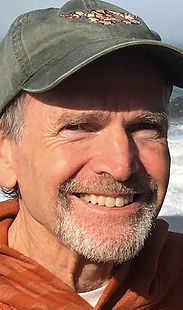
Here we remember Steven G. Morgan, one of the founders of the the International Larval Biology Symposium and an organizer of its first meeting. From his friends and colleagues at UC Davis:
"On June 13 [2025], we lost our beloved and brilliant friend, mentor, and colleague – Dr. Steven Morgan. Steven was Professor Emeritus in the Department of Environmental Science and Policy at UC Davis and spent over 20 years based at Bodega Marine Laboratory (BML). His pioneering work in marine ecology spanned four decades, during which he reshaped our understanding of larval dispersal, life-history evolution, the foundational processes that structure marine communities, and conservation ecology. ... His legacy endures in the ideas he championed, the technologies he developed, the students he inspired, and the countless lives he touched. He will be deeply missed by his family, friends, mentees, colleagues, and by the global scientific community."
You can read the full remembrance here: